Donut Lab's Solid-State Battery Claims Meet a Verge Delivery Slip
Kauppalehti reports Verge now expects first customer deliveries after the end of March, likely in April. The solid-state battery story still needs proof.
April.
Verge Motorcycles expects its first customer deliveries to start after the end of March, most likely in April, CEO Tuomo Lehtimäki told Kauppalehti. He said the timing depends on parts availability and official approvals.
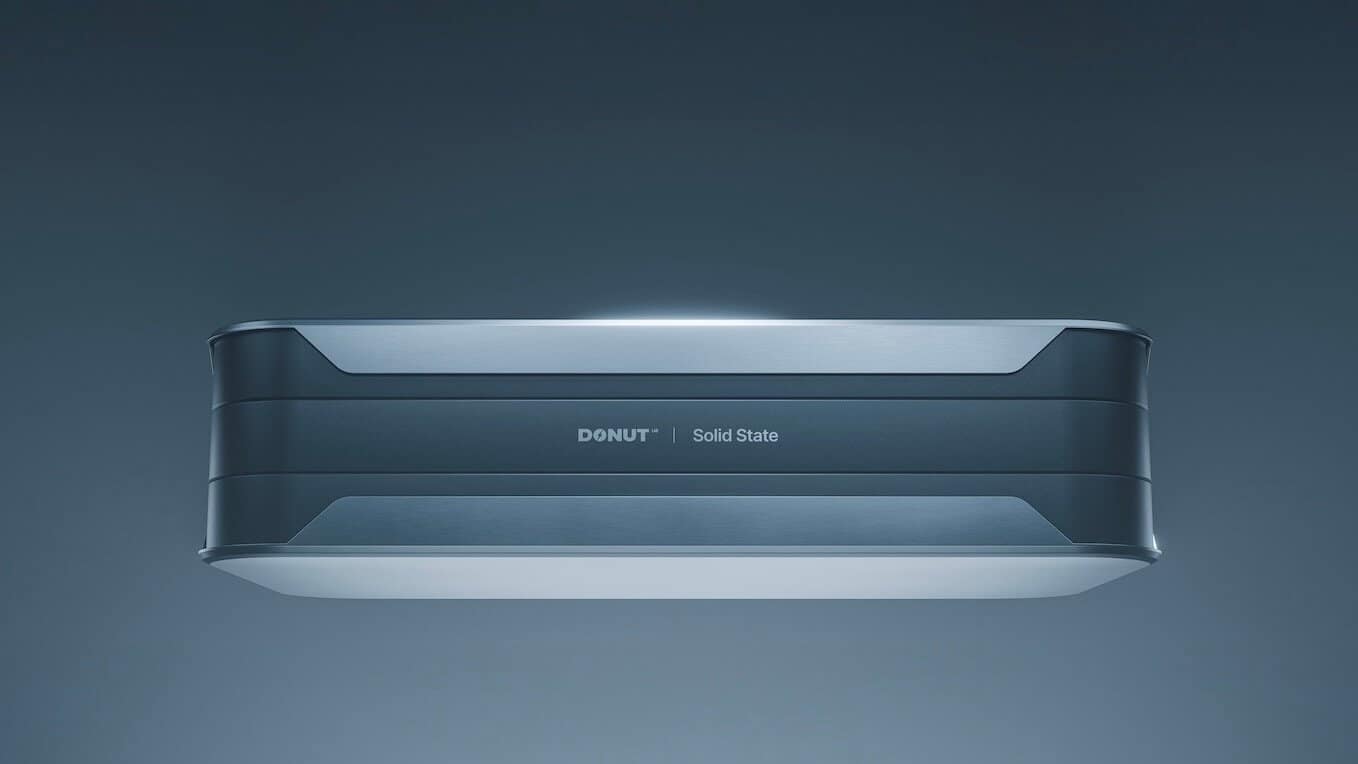
The revised timeline follows a Jan. 5 announcement at the Consumer Electronics Show by Donut Lab, a subsidiary of Verge Motorcycles, which stated that first-quarter deliveries were on track for bikes equipped with its proprietary all-solid-state batteries.
The initial rollout will be limited to a select group of buyers, according to the Kauppalehti report. Verge expects to manufacture approximately 350 motorcycles in 2026, though Lehtimäki noted that the company’s current order backlog extends into 2027. Verge reports that its motorcycles, which are built to order in Estonia, are fully homologated for the European Union market, facilitating the initial European rollout.
Donut Lab has marketed its solid-state battery technology aggressively, citing major safety and performance improvements over traditional lithium-ion cells due to the removal of flammable liquid electrolytes. However, the company has not yet published independent, third-party testing data or specific test protocols to verify its CES claims, which include a 100,000-cycle design target, an energy density of 400 watt-hours per kilogram, and a full charge time of five minutes.
Discrepancies remain between Donut Lab’s charging claims and Verge’s published vehicle specifications. The Verge TS Pro model is offered with either a 20.2 kWh or 33.3 kWh battery pack, with listed maximum DC fast-charging capacities of 100 kW and 200 kW, respectively. Charging a 33.3 kWh battery to full capacity in five minutes would require an average power intake of approximately 400 kW, double the pack’s listed maximum input.
Deliveries to the United States remain on a separate timeline. Verge expects to begin U.S. sales of the TS Pro in the fourth quarter of 2026, pending certifications and sales permissions. U.S. models will be equipped with the NACS Combo plug to align with North American fast-charging infrastructure.
The simplest way to remove doubt is documentation.
Publish a dated cell-level test report with a named lab.
Publish a vehicle-level charge curve for the 33.3 kWh pack at the stated 200 kW fast charge power, including the start and end state of charge.
Publish cycle-life results with the test protocol spelled out, including depth of discharge, temperature, charge rate, and end-of-life definition.
Then deliver the bikes.
Two things are worth watching next. First, whether Verge posts evidence of first customer deliveries in April rather than another schedule. Second, whether an independent test report appears that pins down the five-minute and 100,000-cycle claims under clearly stated conditions.
The Powertrain Chronicle provides news and commentary for informational purposes only. Nothing on this site constitutes financial, investment, or purchasing advice. Always do your own research before making any financial or purchasing decision. See our terms of service for details.
Michael Calder
Published on February 4, 2026
Discussion
Related Articles
VTT Validation Confirms Donut Lab Charging Speed, Exposes Thermal Limits
Independent data validates the Finnish startup's 4.5-minute charge time, but extreme heat generation contradicts claims that active cooling is unnecessary.
Donut Lab Launches 'idonutbelieve' Video Campaign Amid Mounting Skepticism Over Battery Claims
Donut Lab rolled out its 'idonutbelieve' video campaign Friday, promising future proof of its heavily disputed solid-state battery claims.
FAW Hongqi 500 Wh/kg Prototype Shifts Solid-State Focus to Legacy OEMs
FAW unveils a Hongqi prototype with a 500 Wh/kg semi-solid-state battery, challenging startup narratives with institutional scale.