Donut Lab Launches 'idonutbelieve' Video Campaign Amid Mounting Skepticism Over Battery Claims
Donut Lab rolled out its 'idonutbelieve' video campaign Friday, promising future proof of its heavily disputed solid-state battery claims.
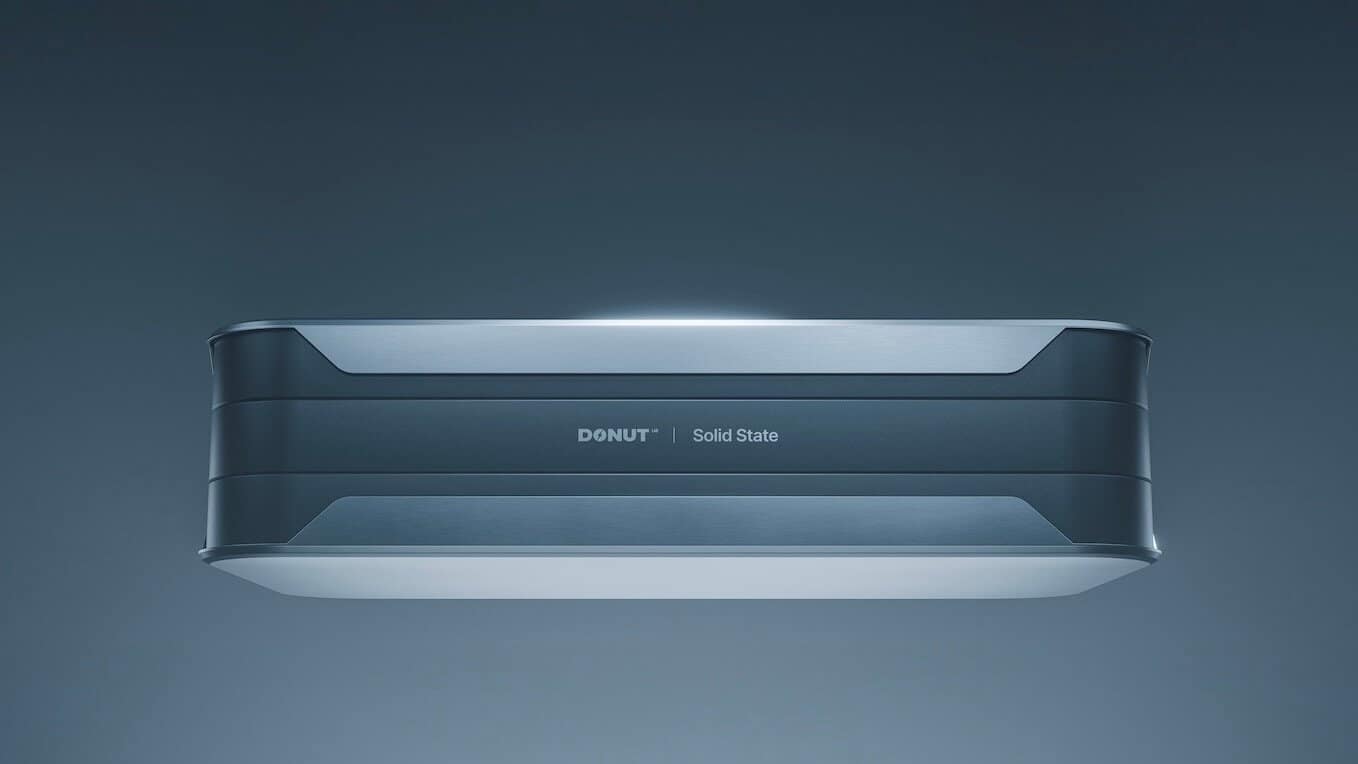
Finnish technology startup Donut Lab rolled out a highly anticipated video campaign titled “idonutbelieve” on Friday, an effort the company claims will eventually prove the validity of its heavily contested solid-state battery technology.
The campaign’s debut video, which premiered at 9:00 a.m. local time via the company’s dedicated idonutbelieve.com portal, served strictly as an introduction to the upcoming series. It offered no immediate technical data, physical demonstrations, or third-party test results. According to a recent letter to shareholders, today’s initial release was intended only to outline expectations and recap recent events, with concrete evidence promised in subsequent episodes.
The campaign video is also available on YouTube: iDonutBelieve.
The company had previously acknowledged that independent verification of its battery technology faced “delays beyond our control.”
In a development that lends partial credibility to the campaign, VTT Technical Research Centre of Finland (one of Europe’s leading applied research organisations) confirmed on Friday that it had been commissioned by Donut Lab to carry out battery measurements in its research laboratory. VTT’s announcement does not disclose specific results; instead, Donut Lab will publish the findings as part of the idonutbelieve series on its own website. The decision to channel results through the company rather than through an independent VTT publication is already drawing attention from observers, who note that authentic third-party validation would typically involve the testing body releasing its own, unmediated report.
Donut Lab triggered a firestorm of industry debate at the CES technology trade show in January 2026 when it unveiled claims of a production-ready, lithium-free solid-state battery. The company touted unprecedented specifications, including:
A five-minute full charge time.
An energy density of 400 watt-hours per kilogram (Wh/kg).
A 100,000-cycle lifespan.
Extreme temperature resilience and lower production costs than standard lithium-ion cells.
The firm also claimed the batteries are already capable of gigawatt-hour-level production and are slated to power upcoming models from Verge Motorcycles, a company with which Donut Lab shares a co-founder.
However, the absence of independent testing and the display of what appeared to be empty 3D-printed mockups at CES have drawn sharp criticism from battery researchers and rival automotive executives. Experts note that the promised specifications far exceed the current commercial capabilities of both traditional lithium-ion cells and emerging solid state or graphene supercapacitor technologies.
Donut Lab has maintained that its manufacturing process allows for rapid scaling and circumvents traditional battery chemistry limitations. The startup insists the forthcoming videos in the “idonutbelieve” series will systematically validate each of its key performance claims.
To achieve an energy density of 400 Wh/kg alongside radical structural flexibility, researchers, including battery expert Dr. Joachim Sann, suggest Donut Lab may be utilizing organic quinone cathodes applied via advanced screen-printing techniques.
Quinones are extremely lightweight, redox-active organic molecules. By screen-printing these organic materials into “bipolar stacks,” manufacturers can completely eliminate the heavy copper and aluminum current-collector foils required in traditional electric vehicle batteries.
Industry skeptics point to a mounting list of red flags, questioning the logic behind the company’s opaque validation process. If the technology is truly production-ready, critics argue, supplying a single cell to an independent laboratory for direct, unmediated testing should be a straightforward task. Yet, Donut Lab has consistently failed to showcase even one working prototype in public, relying instead on empty mockups and conceptual videos. With the first Verge Motorcycles equipped with these batteries reportedly scheduled to ship in April, the sector is increasingly baffled by the secrecy. Observers are left questioning what exactly will change between now and the planned April launch that prevents a live demonstration today.
Critics characterize today’s “idonutbelieve” launch as a hype-building delay tactic, pointing out that the inaugural video failed to deliver the definitive proof the sector has been demanding. Conversely, electric mobility advocates argue that the imminent rollout of Verge Motorcycles’ april 2026 production models leave Donut Lab no room to hide; the bikes will either perform on public roads or expose the company to intense scrutiny.
Industry watchers and global battery manufacturers are monitoring the campaign closely, waiting to see if Donut Lab can substantiate what would be one of the most significant breakthroughs in modern energy storage, or if the venture will become a cautionary tale of overstated technological promises.
The Powertrain Chronicle provides news and commentary for informational purposes only. Nothing on this site constitutes financial, investment, or purchasing advice. Always do your own research before making any financial or purchasing decision. See our terms of service for details.
Michael Calder
Published on February 20, 2026
Discussion
Related Articles
VTT Validation Confirms Donut Lab Charging Speed, Exposes Thermal Limits
Independent data validates the Finnish startup's 4.5-minute charge time, but extreme heat generation contradicts claims that active cooling is unnecessary.
Donut Lab's Solid-State Battery Claims Meet a Verge Delivery Slip
Kauppalehti reports Verge now expects first customer deliveries after the end of March, likely in April. The solid-state battery story still needs proof.
FAW Hongqi 500 Wh/kg Prototype Shifts Solid-State Focus to Legacy OEMs
FAW unveils a Hongqi prototype with a 500 Wh/kg semi-solid-state battery, challenging startup narratives with institutional scale.